Reviewed by Dr. Jason Wright, D.O. · September 23, 2026
The science
How it works
KISS1R on GnRH neurons
Kisspeptin binds KISS1R receptors on GnRH neurons in the hypothalamus, the master switch sitting above the whole reproductive axis.
Restores the pulse
GnRH has to be released in pulses. Steady, non-pulsatile signaling shuts the axis down instead of driving it.
LH and FSH from the pituitary
LH tells the Leydig cells to make testosterone. FSH supports the Sertoli cells and sperm production.
Why fertility is preserved
The signal starts at the top, so the testes keep working. Outside testosterone does the opposite: it suppresses LH and FSH.
Human studies show kisspeptin reliably raises LH and testosterone. Long-term clinic use has less research.
Dosing
Your dosing plan
Dr. Wright sets your exact dose within this range at your visit.
Standard protocol
FormSubcutaneous
Dose100 mcg (10 units)
Schedule2 to 3 times a week
Based onClinical convention
Course
Form—
Dose8 to 12 weeks
ScheduleThen reassess
Based onClinical practice
Labs
FormBlood draw
DoseBaseline and 6–8 weeks
ScheduleLH, FSH, testosterone, estradiol
Based onProtocol
Side effects
Side effects and what to expect
Redness at the injection siteCommon · First few weeks
Rotate sites.
FlushingUncommon · After doses
Usually brief.
HeadacheUncommon · First doses
Stay hydrated.
Changes in mood or libidoUncommon · Any time
Let us know at your follow-up.
A note from Dr. Wright
Plenty of men want their testosterone addressed without shutting down their own production or their fertility. Kisspeptin supports the system instead of replacing it.
Dr. Jason Wright, D.O. · Board certified, American Board of Cosmetic Surgery
Cost & access
Getting started with Kisspeptin
Kisspeptin
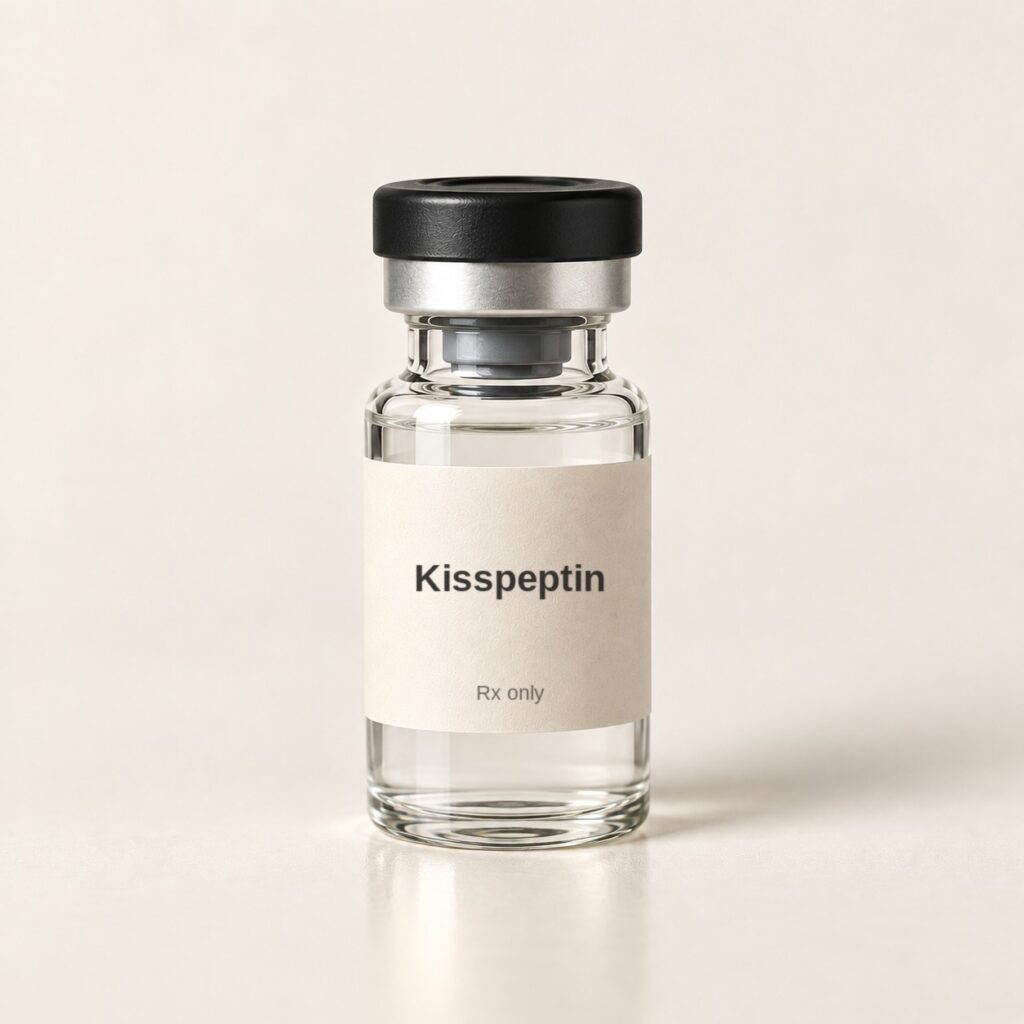
5 mg in a 5 mL vial (1 mg/mL) · Labeled in your name