A 15–amino acid peptide first studied for protecting the stomach lining. Now one of the most requested peptides for tendon, ligament, joint, and gut recovery.
Reviewed by Dr. Jason Wright, D.O. · September 23, 2026
The science
How it works
Builds new blood vessels
Upregulates VEGFR2, the receptor that drives new blood vessel growth, bringing circulation to tendons and ligaments that normally get very little.
Works through nitric oxide
Acts on the nitric oxide system that controls blood vessel tone and healing, one reason its effects show up across so many different tissues.
Rebuilds cell attachments
Activates the FAK–paxillin pathway, which lets tendon cells migrate, anchor, and rebuild the matrix around them.
Makes tendon cells more responsive
In lab studies it increases growth hormone receptor expression on tendon fibroblasts, so they respond more strongly to the body’s own repair signals.
Most of this comes from animal and cell research. The human studies so far are small, but their results have been encouraging.
Dosing
Your dosing plan
Dr. Wright sets your exact dose within this range at your visit.
Week 1
FormSubcutaneous
Dose300 mcg (10 units)
ScheduleOnce daily
Based onTolerance check
Standard dose
FormSubcutaneous
Dose600 mcg (20 units)
ScheduleOnce daily, 4–8 weeks
Based onPharmacy labeling, clinical practice
Split dose
FormSubcutaneous
Dose300 mcg (10 units) twice daily
ScheduleOnly if directed
Based onClinical practice
Gut-focused
FormOral capsule
Dose500 mcg (see BPC-157 Capsules)
ScheduleDaily, 4–8 weeks
Based onAnimal studies
Side effects
Side effects and what to expect
Redness or irritation at the injection siteCommon · First few weeks
Rotate sites. Let the vial reach room temperature first.
NauseaUncommon · First doses
Usually passes. Let us know if it doesn’t.
Headache or dizzinessUncommon · First week
Stay hydrated and mention it at your follow-up.
Allergic reactionRare · Any time
Stop and contact the practice.
A note from Dr. Wright
Tendons and ligaments are some of the slowest tissues in the body to heal because they get so little blood flow. That’s where BPC-157 has drawn the most interest. It’s also why I like combining it with hyperbaric oxygen therapy, which increases blood flow and lowers inflammation. The peptide supports the repair; the oxygen helps get it where it needs to go.
Dr. Jason Wright, D.O. · Board certified, American Board of Cosmetic Surgery
Cost & access
Getting started with BPC-157
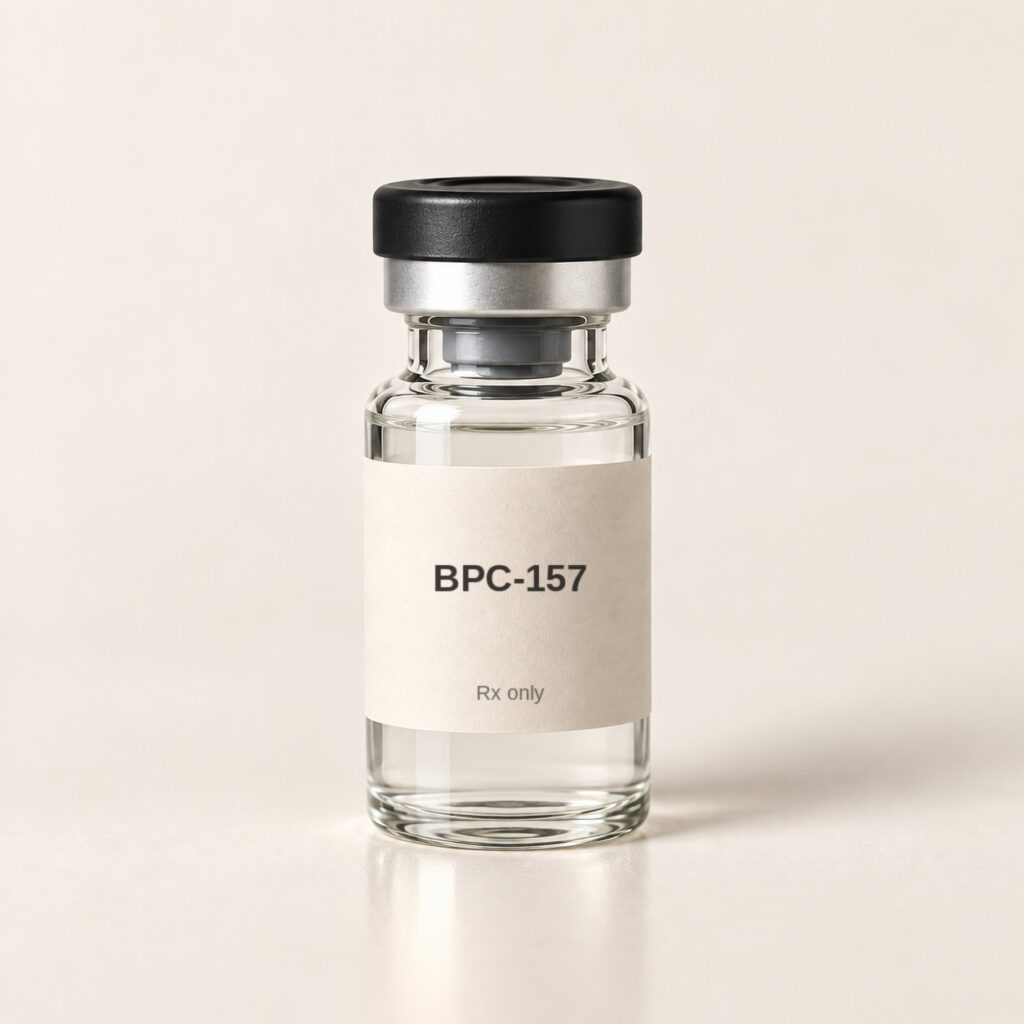
BPC-157
15 mg in a 5 mL vial (3 mg/mL), ready to inject, no mixing · Labeled in your name
Many patients report changes within 2 to 4 weeks. Tendons and ligaments heal slowly, so judge your results at the end of the course, not the first week.
Where do I inject it?
Always under the skin, never into a joint or tendon at home. Dr. Wright will show you where, usually the abdomen or near the injured area.
Can I keep taking ibuprofen?
Ask Dr. Wright first. Don’t stop or change a prescribed medication on your own.
Is BPC-157 legal?
Yes, when prescribed and compounded for you by a licensed 503A pharmacy. It is not FDA-approved. In July 2026 an FDA advisory committee recommended it for the compounding list, with final action pending.
Research
Supporting studies
Knee injections with BPC-157 relieved pain in 14 of 16 patients
Lee E, Padgett B. Alternative Therapies in Health and Medicine, 2021