Reviewed by Dr. Jason Wright, D.O. · September 23, 2026
The science
How it works
Encoded by mitochondrial DNA
A 16–amino acid peptide written in the mitochondrial 12S rRNA gene, not in the nucleus. It is a message from the mitochondria to the rest of the cell.
Activates AMPK
AMPK is the cell’s energy sensor, the same pathway exercise and metformin work through.
Works through the folate cycle
It interferes with folate–one-carbon metabolism, raising AICAR, which is the trigger that switches AMPK on.
Improves glucose handling
In animal studies that shift helps muscle take up and use glucose more efficiently.
Most of this comes from animal research. Human studies are just beginning.
Dosing
Your dosing plan
Dr. Wright sets your exact dose within this range at your visit.
Starting dose
FormSubcutaneous, morning
Dose2.5 mg (25 units)
ScheduleTwice a week, 2 weeks
Based onClinical practice
If directed
FormSubcutaneous, morning
Dose5 mg (50 units)
Schedule2 to 3 times a week
Based onClinical practice
Course
Form—
Dose4 to 8 weeks
ScheduleThen at least 4 weeks off
Based onClinical practice
Side effects
Side effects and what to expect
Redness or irritation at the injection siteCommon · First few weeks
Rotate sites.
Fatigue or lightheadednessUncommon · First doses
Eat beforehand; let us know if it persists.
Low blood sugar symptomsUncommon · If on diabetes medications
Tell Dr. Wright about all glucose-lowering medications.
Allergic reactionRare · Any time
Stop and contact the practice.
A note from Dr. Wright
MOTS-c comes from your mitochondria, which is unusual for a peptide. I use it with patients who train and want more out of that training, and it works best when the training is already happening.
Dr. Jason Wright, D.O. · Board certified, American Board of Cosmetic Surgery
Cost & access
Getting started with MOTS-c
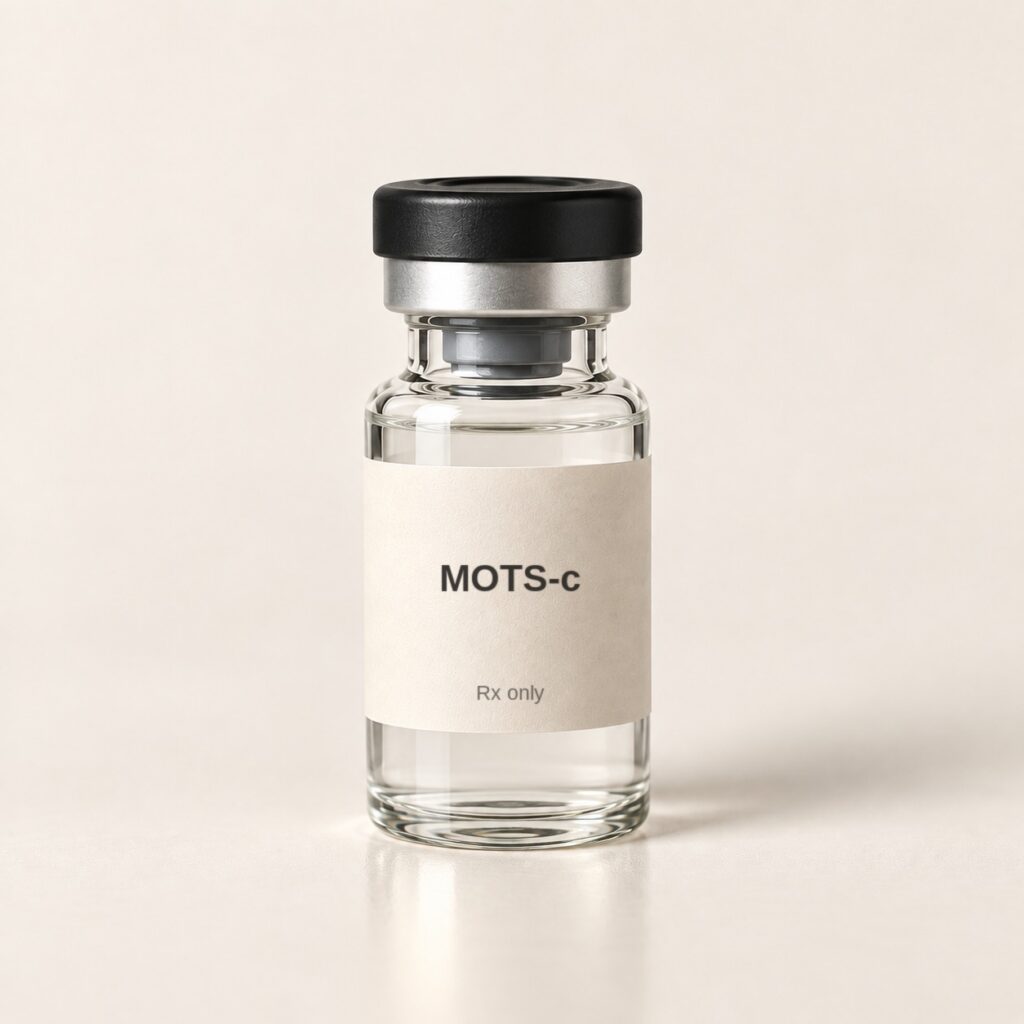
MOTS-c
50 mg in a 5 mL vial (10 mg/mL) · Labeled in your name