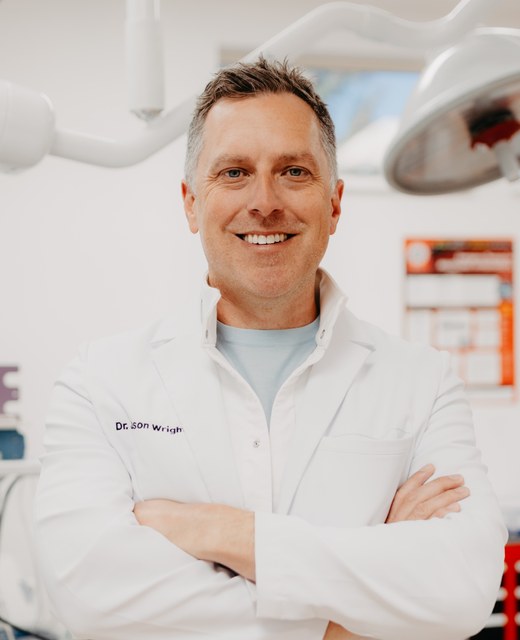
Reviewed by Dr. Jason Wright, D.O. · September 23, 2026
The science
How it works
Carries electrons for energy
NAD+ shuttles electrons into the mitochondrial electron transport chain, the final step where cells turn food into ATP.
Fuels DNA repair
PARP enzymes consume NAD+ each time they repair a break in a DNA strand, so repair demand competes directly with energy production.
Activates sirtuins
The sirtuin enzymes (SIRT1 through SIRT7) can only work with NAD+. They regulate metabolism, inflammation, and how cells handle stress.
Declines with age
CD38 activity rises as we age and consumes NAD+, one leading explanation for why levels fall.
NAD+ biology is well established. Studies of NAD+ injections specifically are still limited.
Dosing
Your dosing plan
Dr. Wright sets your exact dose within this range at your visit.
Starting dose
FormSubcutaneous
Dose25 mg (25 units)
Schedule3 times a week, 2 weeks
Based onClinical practice
Standard dose
FormSubcutaneous
Dose50 mg (50 units)
Schedule3 times a week
Based onClinical practice
Maximum
FormSubcutaneous
Dose100 mg (100 units)
Schedule3 to 5 times a week, only if directed
Based onClinical practice
Technique
Form—
DoseInject slowly, over 30 to 60 seconds
ScheduleMost side effects come from injecting too fast
Based onClinical practice
Side effects
Side effects and what to expect
Flushing or warmthCommon · During or right after injecting
Inject more slowly or lower the dose.
NauseaCommon · First doses
Eat beforehand; slow the injection.
Burning at the injection siteCommon · During injection
Slow down and rotate sites.
Cramping or tightnessUncommon · First doses
Lower the dose; let us know if it persists.
A note from Dr. Wright
Energy is the complaint I hear most. NAD+ works at the source, inside the mitochondria, and I build patients up slowly so it feels good from the first dose.
Dr. Jason Wright, D.O. · Board certified, American Board of Cosmetic Surgery
Cost & access
Getting started with NAD+
NAD+
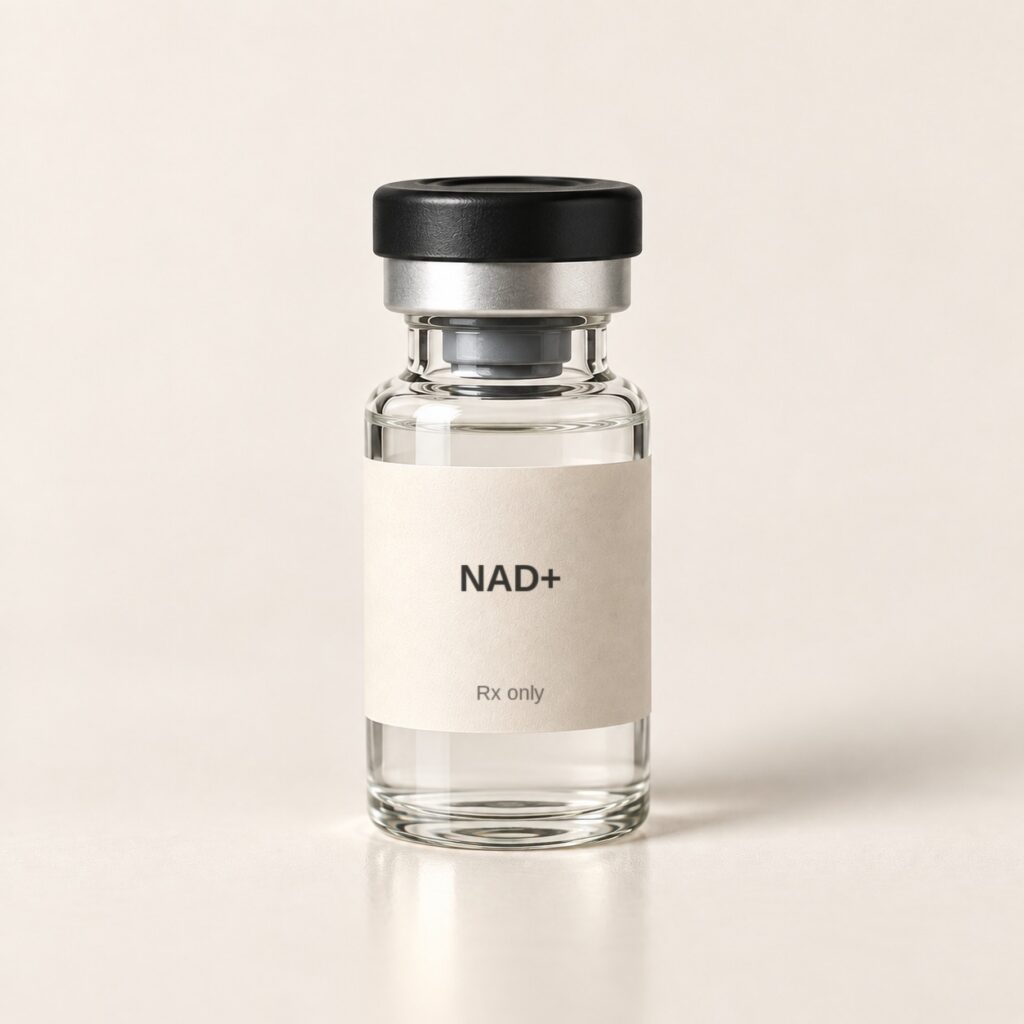
1,000 mg in a 10 mL vial (100 mg/mL) · Labeled in your name