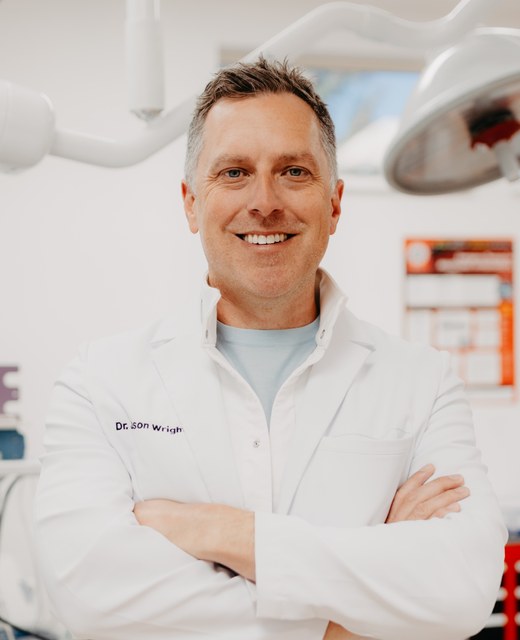
Reviewed by Dr. Jason Wright, D.O. · September 23, 2026
The science
How it works
Blood supply (BPC-157)
Upregulates VEGFR2 and works through nitric oxide to build new vessels into tissue that gets little blood flow.
Cell movement (TB-500)
Comes from thymosin beta-4, which binds actin, the fibre repair cells use to crawl toward an injury.
Calms inflammation (KPV)
Blocks NF-κB, the switch that turns on inflammatory genes, so swelling doesn’t stall the repair.
Collagen remodeling (GHK-Cu)
Delivers copper to lysyl oxidase and signals fibroblasts to lay down collagen and elastin in the skin above the repair.
One injection
All four at matched doses, which is the difference between a protocol people finish and one they abandon.
Most evidence comes from animal and cell research on the individual peptides.
Dosing
Your dosing plan
Dr. Wright sets your exact dose within this range at your visit.
Week 1
FormSubcutaneous
Dose10 units (300 mcg each of BPC-157, TB-500, KPV; 1 mg GHK-Cu)
ScheduleOnce daily, Mon–Fri
Based onTolerance check
Standard dose
FormSubcutaneous
Dose20 units (600 mcg each of BPC-157, TB-500, KPV; 2 mg GHK-Cu)
ScheduleOnce daily, Mon–Fri, 4–6 weeks
Based onPharmacy labeling, clinical convention
Ready to use
FormLiquid vial
DoseNo mixing needed
ScheduleKeep refrigerated
Based onPharmacy labeling
Side effects
Side effects and what to expect
Stinging or redness at the injection siteCommon · First few weeks
GHK-Cu stings. Rotate sites.
NauseaUncommon · First doses
Usually passes.
Headache or tirednessUncommon · First week
Stay hydrated.
Allergic reactionRare · Any time
Stop and contact the practice.
A note from Dr. Wright
I recommend the Recovery Blend when scar and skin quality matter as much as how quickly the tissue heals. It adds GHK-Cu for collagen and KPV for inflammation to the core repair peptides, which makes it a natural fit after surgery once your surgeon clears you.
Dr. Jason Wright, D.O. · Board certified, American Board of Cosmetic Surgery
Cost & access
Getting started with Recovery Blend
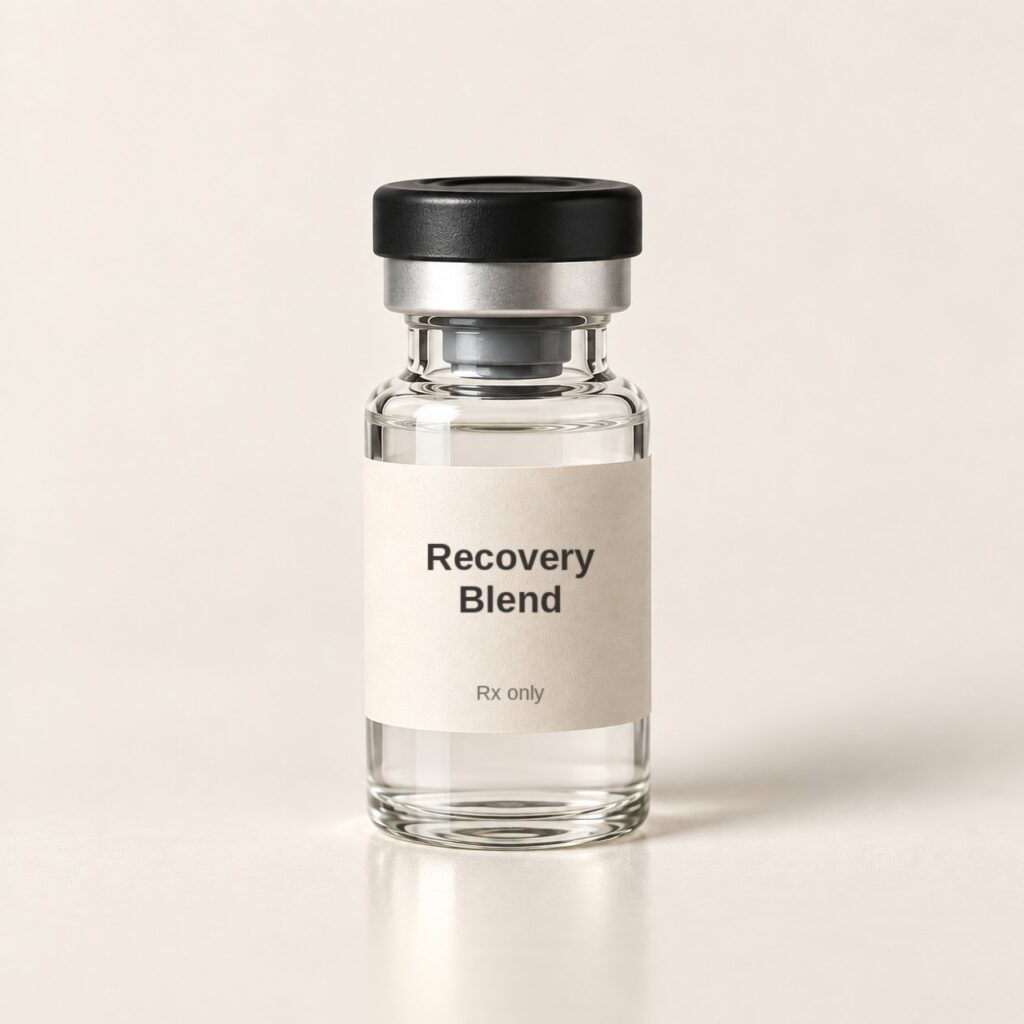
Recovery Blend
KPV, BPC-157, TB-500 (3 mg/mL each) + GHK-Cu (10 mg/mL) in one 5 mL vial · Labeled in your name
How is this different from the Recovery Blend, No Copper?
This blend includes GHK-Cu for collagen, skin, and scar quality. The no-copper version leaves it out. Choose this one when how the skin heals matters as much as the repair underneath.
How is this different from the Wolverine Blend?
The Recovery Blend adds GHK-Cu for collagen and skin quality and KPV for inflammation. Wolverine is the repair pair alone.
Why does it sting?
GHK-Cu commonly stings at the injection site. Rotating sites helps.
When do I start after surgery?
Your surgeon sets the timing. Our default is 2 to 3 days after surgery.
Is it legal?
Yes, when prescribed and compounded for you by a licensed 503A pharmacy. None of the four is FDA-approved.
Research
Supporting studies
Knee injections of BPC-157, alone or with thymosin beta-4, relieved pain in 14 of 16 patients
Lee E, Padgett B. Alternative Therapies in Health and Medicine, 2021