Reviewed by Dr. Jason Wright, D.O. · September 23, 2026
The science
How it works
Signals the pituitary
Binds GHRH receptors in the pituitary, prompting release of your own growth hormone.
Works in natural pulses
Your body’s feedback controls stay in place, so levels rise in normal pulses.
Raises IGF-1
Growth hormone drives the liver’s production of IGF-1, which carries most of its effects.
Short-acting by design
It lasts only minutes in the blood, so bedtime dosing lines up with your natural overnight pulse.
Human studies are modest in size, but sermorelin’s history as an approved drug gives it more human data than most peptides.
Dosing
Your dosing plan
Dr. Wright sets your exact dose within this range at your visit.
Starting dose
FormSubcutaneous, bedtime
Dose210 mcg (7 units)
Schedule5 nights on, 2 off, 4 weeks
Based onHuman studies, clinical use
Standard dose
FormSubcutaneous, bedtime
Dose300 mcg (10 units)
Schedule3 to 6 months
Based onGuided by labs
Maximum
FormSubcutaneous, bedtime
Dose510 mcg (17 units)
ScheduleOnly if directed
Based onGuided by labs
Side effects
Side effects and what to expect
Redness at the injection siteCommon · First few weeks
Rotate sites. Let the vial reach room temperature first.
Flushing or headacheUncommon · First doses
Usually passes within the first week or two.
Swelling, joint aches, or tingling handsUncommon · Any time
Let us know. These usually mean the dose needs to come down.
Rising blood sugarUncommon · Seen on labs
Dr. Wright monitors this and adjusts your dose.
A note from Dr. Wright
I start most patients here because sermorelin works with your body instead of overriding it. Your pituitary still decides how much to release, and your own feedback still sets the ceiling. Your labs tell us whether it’s doing anything.
Dr. Jason Wright, D.O. · Board certified, American Board of Cosmetic Surgery
Cost & access
Getting started with Sermorelin
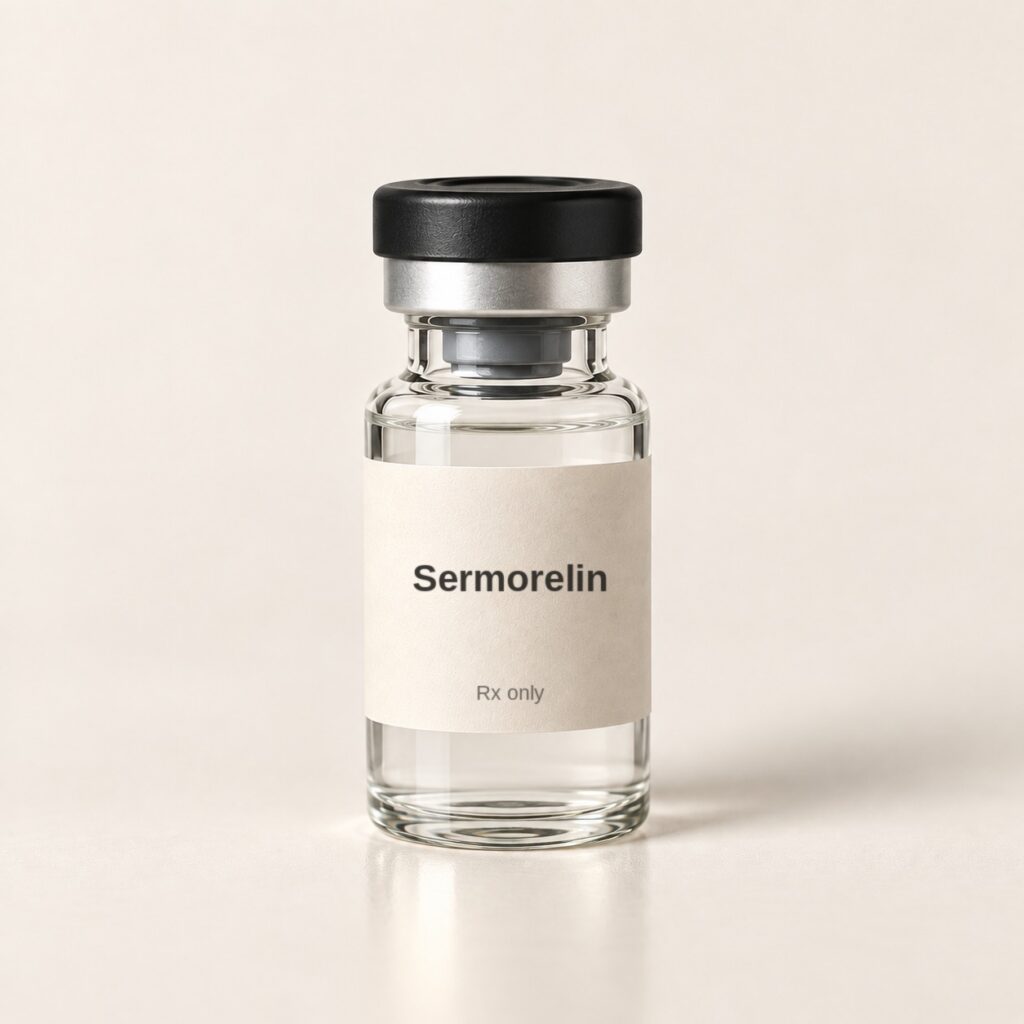
Sermorelin
15 mg in a 5 mL vial (3 mg/mL), ready to inject · Labeled in your name