Reviewed by Dr. Jason Wright, D.O. · September 23, 2026
The science
How it works
Builds new blood vessels (BPC-157)
Upregulates VEGFR2, the receptor that drives new vessel growth, bringing circulation to tendons and ligaments that get very little.
Rebuilds attachments (BPC-157)
Activates the FAK–paxillin pathway, letting tendon cells migrate, anchor, and rebuild the matrix around them.
Moves repair cells (TB-500)
From thymosin beta-4, which binds actin, the fibre cells use to crawl toward the site of injury.
Calms inflammation (TB-500)
Lowers inflammatory signalling around injured tissue in animal studies, which is why it is used for stiffness as well as acute injury.
Most of the evidence comes from animal and cell research on each peptide. The combination is used by clinical convention.
Dosing
Your dosing plan
Dr. Wright sets your exact dose within this range at your visit.
Week 1
FormSubcutaneous
Dose10 units (300 mcg of each)
ScheduleOnce daily
Based onTolerance check
Standard dose
FormSubcutaneous
Dose20 units (600 mcg of each)
ScheduleOnce daily, 4–6 weeks
Based onPharmacy labeling, clinical practice
Maximum
FormSubcutaneous
Dose33 units (1 mg of each)
ScheduleOnly if directed
Based onPractice maximum
Recovery Blend option
FormAdds KPV and GHK-Cu
Dose10 units week 1, then 20 units
ScheduleDaily, Mon–Fri, 4–6 weeks
Based onWhen skin or scar quality matters too
Recovery Blend, No Copper option
FormAdds KPV
Dose10 units week 1, then 20 units
ScheduleDaily, Mon–Fri, 4–6 weeks
Based onWhen inflammation is prominent
Side effects
Side effects and what to expect
Redness or irritation at the injection siteCommon · First few weeks
Rotate sites. Let the vial reach room temperature first.
NauseaUncommon · First doses
Usually passes. Let us know if it doesn’t.
Headache or tirednessUncommon · First week
Stay hydrated and mention it at your follow-up.
Allergic reactionRare · Any time
Stop and contact the practice.
A note from Dr. Wright
After surgery or a stubborn injury, patients want their lives back. This is the protocol I reach for most. I recommend pairing it with hyperbaric oxygen when that’s available, and with real rehab.
Dr. Jason Wright, D.O. · Board certified, American Board of Cosmetic Surgery
Cost & access
Getting started with Wolverine Blend
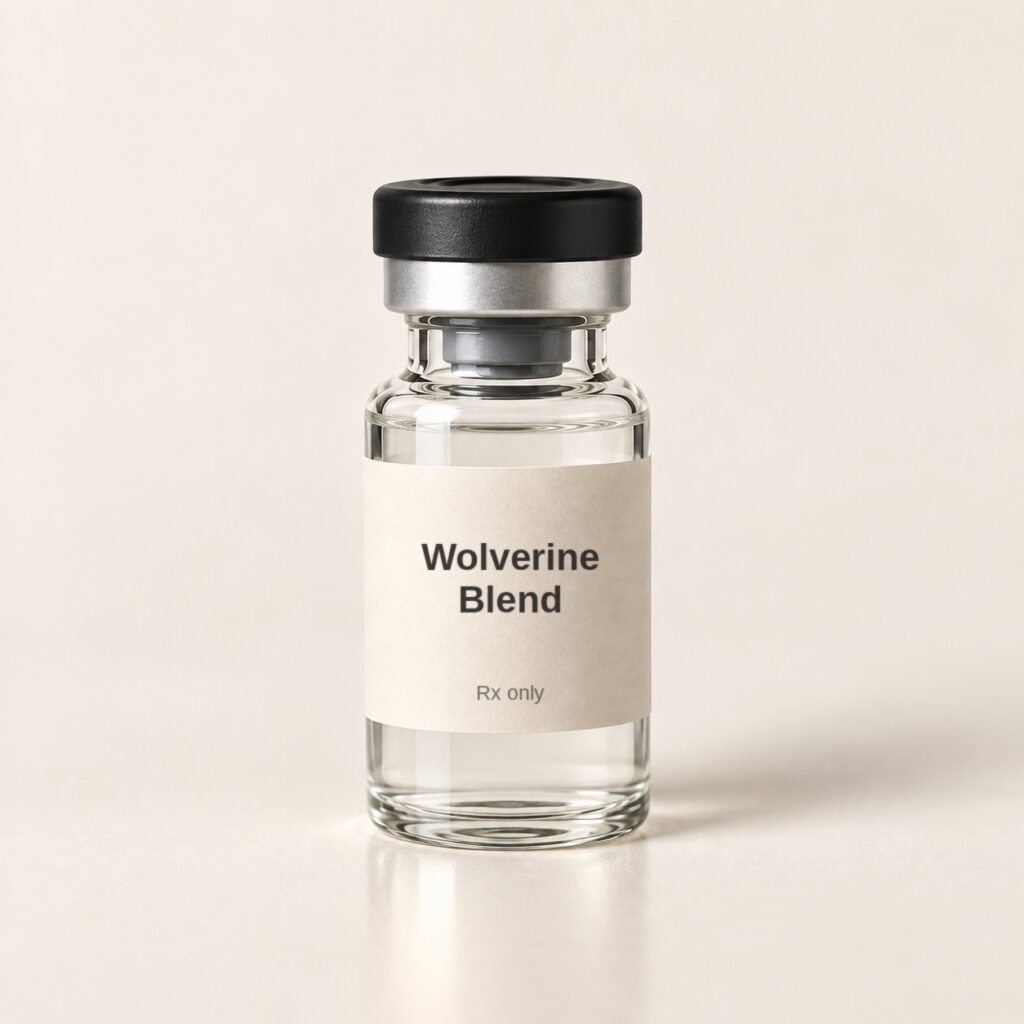
Wolverine Blend
BPC-157 3 mg/mL + TB-500 3 mg/mL in one 5 mL vial, ready to inject · Labeled in your name